The Color of Autonomy: Why 100% of Future Robotaxis May Glow Cyan
Federal regulators are proposing a mandatory blue-green light standard to distinguish driverless vehicles from human-operated cars on the road.
By Rafael Ortega ·
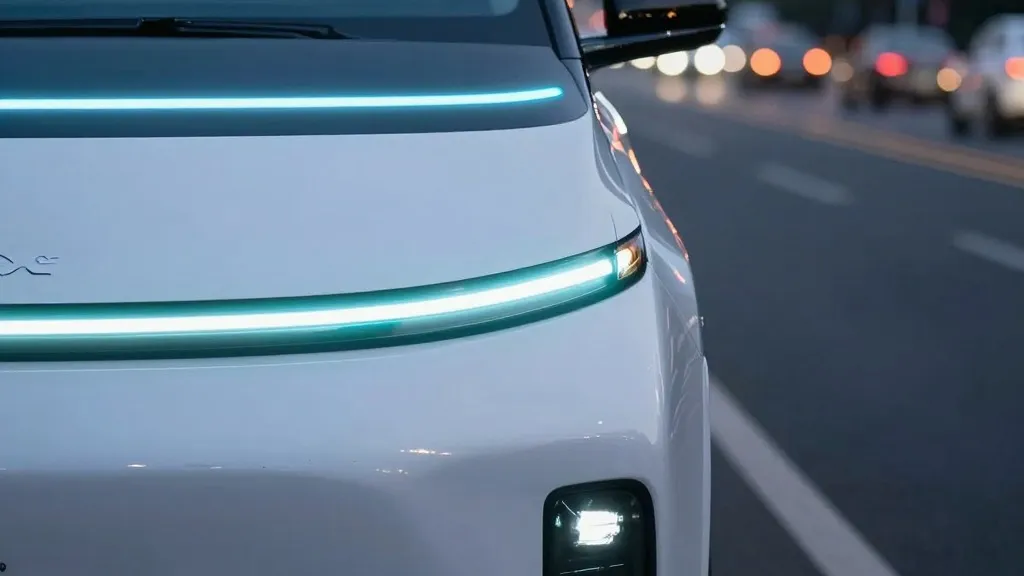
For years, the automotive industry has wrestled with a simple visual problem: how does a driverless car tell the world that no one is behind the wheel? The debate has ranged from flashing text displays to audio alerts, creating a patchwork of potential solutions. Now, federal regulators have cut through the noise with a singular, definitive answer: a distinct cyan light. The National Highway Traffic Safety Administration (NHTSA) has released proposed changes to Federal Motor Vehicle Safety Standard No. 108, aiming to standardize how autonomous vehicles communicate their status to the surrounding traffic environment.
The core of the proposal mandates the use of cyan-colored marker lamps. The agency argues that this specific blue-green hue is necessary to clearly signal to law enforcement and other road users when an automated driving system is in control. The choice is driven by existing visual constraints; red, amber, white, and flashing blue or red lights are already heavily utilized for brakes, turn signals, headlights, and emergency vehicles. Cyan, therefore, represents an available visual gap that could be filled without causing confusion among drivers.
This move aligns with a broader administrative push by the Department of Transportation to streamline the deployment of autonomous vehicles. By establishing a national standard, NHTSA aims to provide a uniform framework that robotaxi operators such as Waymo, Nuro, and Zoox, as well as automakers like GM and Mercedes-Benz, can adopt. While the cyan marker lights would technically remain optional for manufacturers, the proposed rules would strictly define their color, brightness, and placement. This ensures that any vehicle choosing to implement the feature does so with a consistent, legally compliant setup, rather than a confusing array of proprietary signals.
The proposal also seeks to simplify the regulatory landscape by removing requirements that are largely irrelevant for vehicles without human drivers. Current rules demand the presence of physical hazard switches, manual beam shifters, and turn levers. NHTSA proposes eliminating these mandates, allowing automakers to design interiors without traditional controls. Additionally, the agency is updating the 12.8-volt testing standard to accommodate modern LED architectures, reducing administrative hurdles for manufacturers building next-generation lighting systems.
There is precedent for this type of visual signaling, though it has not yet been universally adopted. Mercedes-Benz previously received state-level approval to use turquoise lights on its Level 3 Drive Pilot vehicles, although the company later pivoted to a Level 2++ system. The federal proposal aims to solidify this concept at the national level, creating a clear benchmark for the industry.
However, the path to streamlined regulations is not without friction. Regulators are still enforcing current rules as they are written, which can create tension with new designs. Last month, NHTSA opened an audit query into the Tesla Cybercab to examine the technical data and certification processes used by the manufacturer. The audit focuses on the absence of design features such as sideview mirrors, pedals, and a steering wheel, all of which are currently required under FMVSS. This enforcement action highlights the gap between the new proposed standards and the existing regulatory framework.
As the proposal moves forward, it represents a significant step toward normalizing autonomous vehicles on public roads. By defining a specific visual language for driverless cars, the government hopes to reduce ambiguity for other drivers and police officers. The final rule will determine whether cyan becomes the universal badge of autonomy, signaling a shift in how we perceive and interact with machines on the highway.
Source: The Verge