20,000 per week: Tesla targets rapid ramp for Optimus humanoid robots
Tesla is transitioning from prototype to mass production, aiming for high-volume output while using a dedicated 'Academy' of robots to generate the training data needed for general-purpose AI.
By Jacob Leary ·
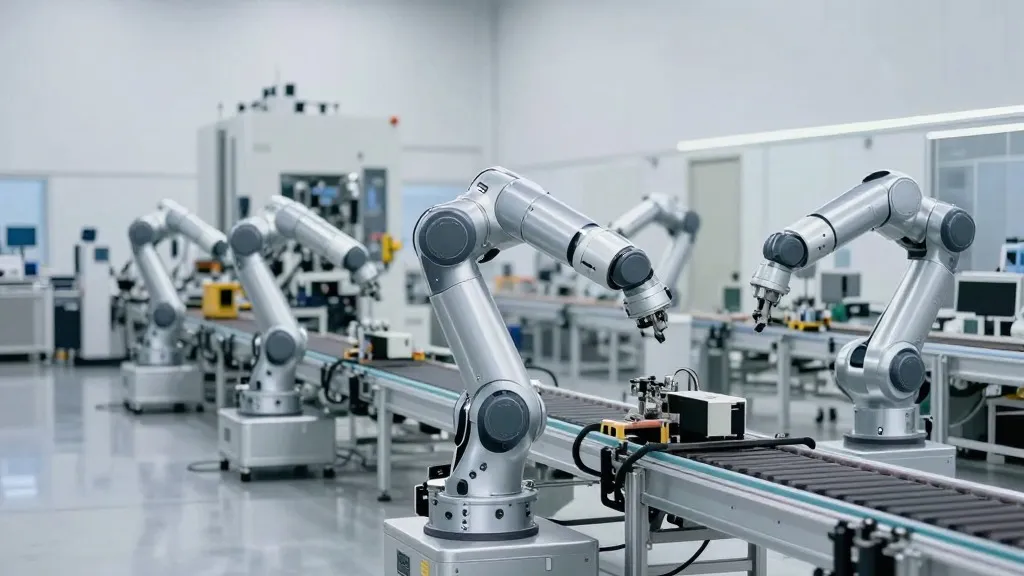
Tesla is targeting a production capacity of roughly 20,000 humanoid robots per week as it ramps up manufacturing at its Fremont factory. This ambitious output goal comes as the company transitions from initial prototype phases to what it describes as the first production-quality units of its Optimus line. The shift marks a significant milestone in the automaker's pivot toward general-purpose robotics, with the goal of meeting commercial standards for reliability and design.
The move to high-volume manufacturing began in earnest earlier this year when Tesla cleared the space previously used for Model S and Model X production in just 46 days. This rapid turnover allowed the company to install equipment sized for a potential one-million-unit annual capacity. As of the third quarter, the infrastructure is largely in place, with most of the necessary machinery already positioned in Fremont to support the upcoming surge in output.
Company leadership has characterized the growth trajectory of Optimus as following a classic S-curve, noting that the initial phase will involve a shallow slope before acceleration occurs. Currently, engineers are focused on refining the robot's artificial intelligence, electromechanical architecture, and long-term service life. Tesla expects to complete this refinement phase by the end of next year, at which point it plans to begin delivering units to external corporate clients for roles involving dangerous, repetitive, or around-the-clock tasks.
A central challenge in developing the robots has been the lack of a large, existing fleet to provide real-world training data, a resource available to Tesla’s automotive division. To address this gap, the company has established an internal initiative known as the Optimus Academy. This system utilizes a pool of 10,000 to 20,000 robots to practice diverse tasks, feeding the resulting data back into the AI model to improve subsequent versions. Every unit produced on the Fremont line effectively serves as a node in this learning network.
Hardware improvements are also imminent, with Tesla planning to integrate its AI5 chip into the robots next year. Executives indicated that a new demonstration video is expected within one or two months, showcasing the robot performing tasks driven by AI rather than preprogrammed motions. This update is intended to distinguish Tesla’s approach from rival humanoid demonstrations that rely on scripted routines, which leadership argues may not hold up in unstructured real-world environments.
The broader supply chain is aligning with this production push. In September, Tesla certified Tuopu, Joyson, and Sanhua as mass-production partners for critical Optimus components. Simultaneously, construction is underway at a much larger dedicated facility at Giga Texas. Recent drone footage shows the steel frame of that plant nearing completion, with long-term targets set at 10 million robots per year.
Cost efficiency is a primary design driver for the program. Executives noted that Optimus production costs are trending toward the manufacturing cost expected for the Cybercab, signaling that the robot is engineered for volume from the outset. However, the mechanical hands remain the most difficult component to perfect. This area continues to receive significant engineering attention, as highlighted during recent company events, to ensure the robots can interact effectively with the physical world.
Source: Teslarati